
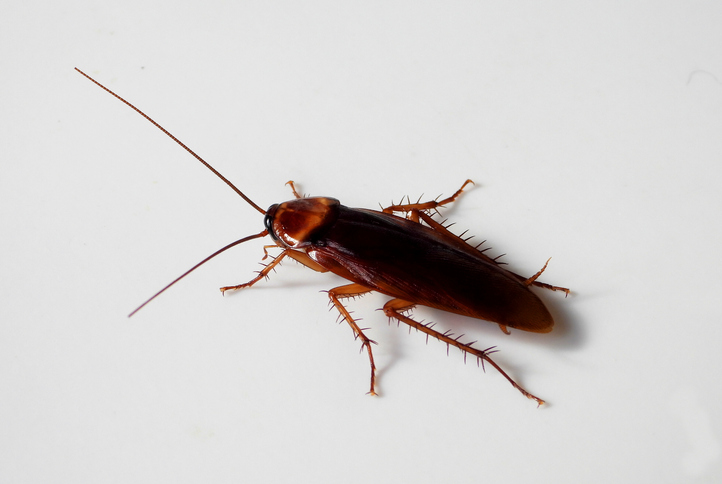

American Cockroaches

by Judy 13. January 2011 09:30
The American cockroach ranges in size from 1 3/8 inches to 2 1/8 inches in size. They are found in residences, but are more common in larger commercial buildings, like restaurants, warehouses, food processing plants, in basements and steam tunnels. In the United States this is the most common species found in city sewer systems. More than 5,000 individuals have been found in a single sewer manhole. American Cockroaches favor microhabitats with high humidity.The American cockroach rarely flies, but if they start from a high distance (like a tree) they can glide for a good distance. They will enter residence in search of warmth, food, and shelter. American cockroaches feed on a wide variety of materials, including cosmetics, beer, potted plants, wallpaper paste, soap, postage stamps, fermenting fruit, pet food, and human food. They contaminate human food, clothing, paper goods, and surfaces with their feces and body parts. They are a mechanical vector of numerous bacterial and viral pathogens, including Samonella and Poliopmyelitis. American cockroaches also produce a strong unpleasant odor. This characteristic odor is not only detectable in infested buildings but is also transferred to items that the cockroaches crawl across when foraging. A pest management professional can often detect an American cockroach infestation by smell before he has actually seen any cockroaches. Elimination is achieved by a combination of exclusion, proper sanitation, use of pesticides applied to critical entry points, and placing baits in gel or dust form near harborage sites.

German Cockroaches

by Judy 12. December 2010 09:36
Adults are 1/2 to 5/8 inches long, light brown to tan, with two dark stripes on the shield (pronotum) behind the head.Females are often seen carrying a yellowish-brown egg capsule (ootheca) protruding from the end of the abdomen. Nymphs are generally darker with two prominent dark stripes surrounding a lighter tan spot or stripe on body midsection (thorax). German cockroaches are our most prolific cockroach species producing 3-6 generations per year. Besides its importance as a sign of poor sanitation used by health departments, the German cockroach has been implicated in the transmission of several pathogenic organisms and as a cause of allergic reactions for children and adults. German cockroaches do not enter structures from outdoors, they are spread entirely by humans and live only indoors. The German cockroach is the major cockroach pest of residences, restaurants, warehouses and food-processing plants in the United States. German cockroaches spend most of their lives in cracks and protected void areas near sources of food and water. The elimination of this pest is the desirable goal in any pest management program. This may include the use of growth inhibitors, baits, as well as residual insecticides specifically labeled for areas of food preparation.

Smoky Brown Cockroaches

by Judy 9. December 2010 09:23
Smoky-brown cockroaches require high humidity for survival. They are found outside in wooded areas that provide shade and moisture. They can also be seen in protected areas around homes (tree holes and mulch) and in buildings and attics. Stacks of lumber and firewood, sewer-access openings and trash piles can contribute to infestations. Once in structures they are commonly found in attics or near fireplaces. These cockroaches can be attracted by a leaky roof. To control Smoky-Brown Roaches you should eliminate or alter any conditions which encourage the presence and/or reproduction of the roaches. These pests thrive in dark, humid areas which have little or no air flow. Spray exterior of structure with an appropriate labeled insecticide.. Spray any crack, crevice or entry point on the outside of the structure. This includes treating around all windows, doors, vents and in weep holes of brick veneer. Also spray tree trunks, from ground to crotch of tree, but no higher than six feet. All mulched areas should be sprayed with your insecticide. These exterior surfaces should be treated 3 to 4 times each year. If necessary, spray indoors in the following areas: basements, garages, carports, attics, closets, laundry rooms. Also treat beneath and behind large appliances (refrigerators, stoves, etc.) or other areas where these roaches prefer to hide. (Spraying all of your baseboards with any bug spray is not necessary!)Indoor areas should be treated 2 to 3 times per year. Hollow blocks or other areas such as behind brick walls and along plumbing lines should be treated with Delta Dust. Although many dusts will kill roaches, Use a dust that is water-resistent and will not be destroyed by the moist habitat of the Smokybrown as would other dusts.