

by Judy
28. July 2011 12:59
Fleas are important group of insect pests because they cause discomfort by biting and they can transmit several diseases like the plague and murine typhus. Fleas cause discomfort and irritation to both pets and people. In the United States Cat fleas are the most common domestic flea and they are commonly found on both cats and dogs.
[More]
by Judy
23. February 2011 20:16
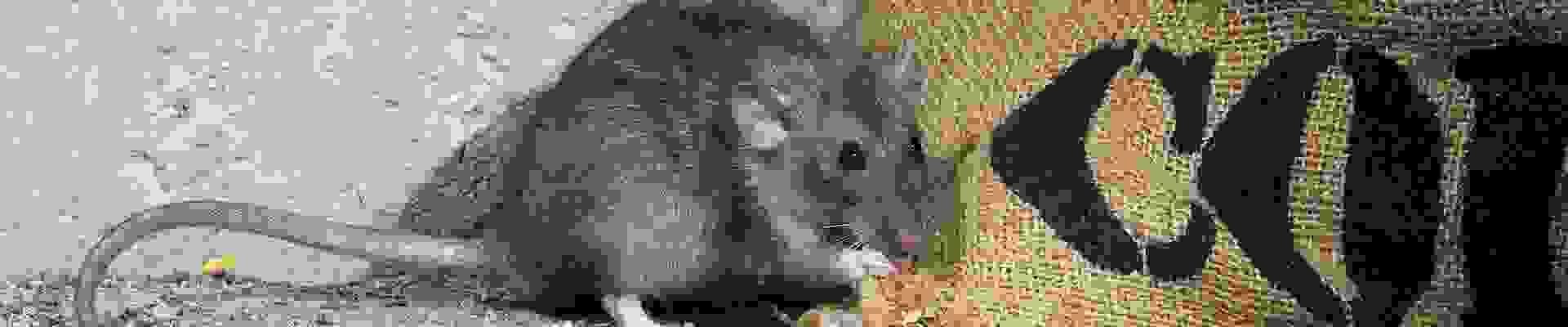
The Norway rat (Rattus norvegicus) is a stocky burrowing rodent, unintentionally introduced to North America by settlers who arrived on ships from Europe. First introduced into the United States about 1775, this rat has now spread throughout the contiguous 48 states. The Norway rat is found generally at lower elevations but may be found wherever humans live.
Also called the brown rat, house rat, barn rat, sewer rat, gray rat, or wharf rat, it is a slightly larger animal than the roof rat. The nose is blunt, the ears are small, close set and do not reach the eyes when pulled down. The tail is scaly, semi-naked and shorter than the head and body combined. When distinguishing the Norway rat from the Roof rat, pull the tail back over the body. The tail of the Roof rat will reach the nose. The tail of the Norway rat will not reach beyond the ears. Adult Norway rats weigh an average of about 1 pound. Their fur is coarse and usually is brownish or reddish-gray above, and whitish-gray on the belly. Blackish individuals occur in some locations.
Norway rats live in close association with people. They burrow to make nests under buildings and other structures, beneath concrete slabs, along stream banks, around ponds, in garbage dumps, and at other locations where suitable food, water and shelter are present. On farms they may inhabit barns, granaries, livestock buildings, silos, and kennels. In urban or suburban areas they live in and around residences, in cellars, warehouses, stores, slaughterhouses, docks, and in sewers. Although they can climb, Norway rats tend to inhabit the lower floors of multi-story buildings.
Rats have poor eyesight beyond three or four feet, relying more on their hearing and their excellent senses of smell, taste and touch. Norway rats are very sensitive to motion up to 30-50 feet away. They are considered essentially colorblind.
Rats use their keen sense of smell to locate food items and apparently to recognize other rats. Norway rats rely on their sense of smell to recognize the odors of pathways, members of the opposite sex who are ready to mate, differentiate between members of their own colonies and strangers, and to tell if a stranger is a strong or weak individual.
Norway rats use hearing to locate objects to within a few inches. This highly developed sense (combined with their touch sensitivity) can pinpoint someone rolling over in bed to a six inch area. The frequency range of their hearing (50 kilohertz or more) is much higher than that of humans (about 20 kilohertz.)
Norway rats will eat nearly any type of food. When given a choice, they select a nutritionally balanced diet, choosing fresh, wholesome items over stale or contaminated foods. They prefer cereal grains, meats and fish, nut, and some types of fruit.Rats require 1/2 to 1 ounce of water daily when feeding on dry foods but need less when moist foods are available.
Norway rats are primarily nocturnal. They usually become active about dusk, when they begin to seek food and water. Some individuals may be active during daylight hours when the rat population is high, when disturbed (weather change, construction, etc.) or when their food source is threatened.
The territories of most rats are between 50 and 150 feet radius of the nest. If need be, however, rats will travel 300 feet or more daily to obtain their food and water. In urban areas most rats remain around the buildings and yards which provide their necessities, and unless they are disturbed, they do not move great distances.
Female Norway rats may come into heat every 4 or 5 days, and they may mate within a day after a litter is born. The average female rat has 4 to 6 litters per year and may successfully wean 20 or more offspring annually. Litters of 6 to 12 young are born 21 to 23 days after conception. Newborn rats are naked and their eyes are closed, but they grow rapidly, eating solid food at 2 1/2 to 3 weeks. They become completely independent at about 3 to 4 weeks and reach reproductive maturity at 3 months of age, sometimes as early as 8 weeks.
When eliminating Norway rats, remember that glue boards are not very effective on large rodents. Snap traps and live traps will work. The most effective control method for these rats is the use of weather proof bait blocks.
by Judy
22. February 2011 20:10
Carpenter bees resemble bumblebees in both size and appearance, but are not social insects. They construct their nests in trees or in frame buildings. Most of the top of the abdomen of carpenter bees is without hairs and is shiny black in color. By contrast, the abdomen of bumblebees is fully clothed with hairs, many of them yellow in color.
The male bee is unable to sting. It is the male carpenter bee, which is most often noticed. They hover in the vicinity of the nest and will dart after any other flying insect that ventures into their territory. A common behavior of the males is to approach people if they move quickly or wave a hand in the air. The males may even hover a short distance from people causing unnecessary panic. The female however, is capable of stinging but seldom does. She must be extremely provoked (i.e. handled) before she will sting.
Carpenter bees do not eat wood. They excavate the tunnels for shelter and as chambers in which to rear their young.
They usually attack unpainted objects such as doors, windowsills, roof eaves, shingles, railings, telephone poles, and sometimes wooden lawn furniture.
A carpenter bee begins her nest by drilling a nearly perfectly round entrance hole (about 1/2 inch diameter) into the wood. This hole is usually against the grain of the wood. When the tunnel is about 1 inch deep, the bee turns at right angles to the initial hole and tunnels with the grain of the wood. Bees prefer to attack wood that is greater than two inches thick.
Young adult male and female bees hibernate in the tunnels during the winter. They mate in the spring and set about to clean out and enlarge the old tunnels or to excavate new ones as brood chambers for their young. Each chamber is provisioned with a portion of "bee bread", a mixture of pollen and regurgitated nectar, which serves as food for the larvae. An egg is deposited on the food supply and each chamber is sealed off. There are typically 6 to 8 chambers created by the female. The larvae that hatch from the eggs complete their development and pupate. Newly developed adult carpenter bees emerge in August, feed on nectar and return to the tunnels to over-winter.
Carpenter bees are relatively easy to treat. Locate the wood in which the bees are active and apply an insecticidal dust directly into nest openings. Do not plug the holes immediately! The bees should be able to pass freely through the nest entrance where they will contact the dust and distribute it inside the tunnels
by Judy
15. February 2011 09:33
Camel crickets get their name because of their slightly humpbacked appearance. Unlike most cricket species, Camel crickets don’t chirp. Because of their long legs and lack of wings – some people mistake them for a spider. They are nocturnal and hide during the day.
There are actually several species called camel crickets. One species, Tachycines asynamorous or "greenhouse stone cricket" frequently becomes a nuisance indoors.
Camel crickets often become a problem when we have extremes in weather conditions, i.e, excessive rainfall or extended periods of hot, dry weather. Like many insect pests, camel crickets are attracted to cool, moist/humid areas in and around our homes. The crickets often invade storage buildings, crawlspaces, basements, garages and indoor areas where moisture may be a problem (e.g., bathrooms, laundry rooms, etc.).
Control begins outdoors with reduction or elimination of moist harborage areas near the structure, such as removing wood piles and debris. Crawlspaces should be well ventilated and a moisture barrier in place. Seal entry points such as door thresholds and installing doorsweeps and holes in the masonry. Microencapsulated or wettable power formulations are particularly effective.
by Judy
11. February 2011 09:48
Paper wasps get their common name from the paperlike material of which they construct their nests; The nests are an umbrella-shape that consists of single-layered brood chambers of paper. Nests remain relatively small, with colonies generally numbering less than 200 workers.
Paper wasps have elongate bodies with distinct body segments, long metathoracic legs that are held outstretched in flight, and strong, relatively narrow, wings.
Only the female have a stinger, but Paper wasps are relatively docile, rarely attaching humans unless provoked.
Paper wasps are considered beneficial insects because they prey upon many pests that feed on agricultural crops. However, in urban areas, paper wasps hang their comb nest in a variety of protected sites near humans, including under the eaves and porch ceilings of houses and outlying buildings, in attic rafters bushes, trees, under bark, and sometimes under stones. The threat of a paper wasp’s sting, and the homeowner’s perception of stinging insects in general, cause the greatest consternation. Car accidents are documented as having resulted from frantic attempts by drivers to avoid contact with a trapped wasp or bee.
In the autumn, inseminated females seek places to over winter. They will investigate crevices and penetrations associated with vents, and skylight flashing, chimneys, window and door frames, utility-line penetrations etc.
Overwintering wasps may find their way into living spaces on sunny autumn, winter, or spring days, especially if there are cathedral ceilings present. Since these are inseminated females and not daughters defending a nest, they are not aggressive and stinging rarely occurs.
Paper wasps are beneficial insects, helping to control many insect pests, however, if their nest is located near human activity, control is warranted. It is essential that the adults be contacted and killed or they will quickly rebuild a nest.
For adults, use an appropriately labeled pesticide such as an aerosol pyrethrin or a pyrethroid and do the application in the early morning or at night. Then remove the nest.
by Judy
3. February 2011 09:38
These beetles were first reported in North Carolina in 1992.
Multicolored Asian lady beetles are about 1/4 inch long. Females are slightly larger than males and specimens from higher elevations are larger than those from the Piedmont and Coastal Plains. These lady beetles vary greatly in appearance. Some have yellowish or orange forewings. Some have beige forewings and some are bright reddish orange.
During the spring and summer, these lady beetles feed on aphids in field crops, gardens, meadows and trees. Multicolored Asian lady beetles are effective predators of aphids and some scale insects and are extremely beneficial for both agricultural and horticultural crops.
As temperatures start to cool in the fall , the adult lady beetles begin their search for protected places in which they can pass the winter. The beetles use visual or physical cues to find suitable overwintering sites. These locations tend to be the sunnier or warmer sides of buildings, or on exposed, light-colored buildings. Of course, this doesn't mean that people with dark-colored siding, brick or log homes are immune to the lady beetle assault. Recent research suggests that, once the beetles arrive at the site, they use chemical cues to locate the specific crevice they want to inhabit within the structure. The sources of these chemical cues have not been clearly identified, but may be beetle feces from the previous winter, the odor of beetles that died at the site, or an attractant pheromone. These factors may help to explain why beetles seem to pick the same sites (not necessarily every year, but perhaps more frequently than they pick nearby areas).
From the exterior of the house, they may move indoors by crawling under defective weather stripping or by crawling and flying in open doors on warm days. The beetles can fit through very small gaps or cracks in siding, masonry, around window and door casings, and even through attic and soffit vents. The beetles hibernate as adults, usually in wall voids (they cannot survive long in the heated rooms of a house). On warm days, they may become active and move towards light or bright surfaces. The beetles are often found on windows, light fixtures and ceilings. The multicolored Asian lady beetle does not reproduce indoors. In spring, they will move outdoors in search of prey.
Fortunately, multicolored Asian lady beetles are primarily a nuisance only. If squashed, however, the beetles may stain fabric and painted surfaces. They do not eat wood or furniture. Some people have reported receiving a mild "nip" by beetles that have landed on them. There have been concerns that large numbers of beetles may possibly cause air quality problems indoors that could trigger allergies and/or asthmatic reactions.
Pesticides have limited effectiveness in stopping the beetle invasion.While exclusion is not 100% effective, preventing the beetles from entering the home is currently one of the best long-term approaches to dealing with the lady beetles
by Judy
23. January 2011 09:46
Cigarette beetles are quite small, measuring about 2 to 3 mm (about 1/8 of an inch), and are reddish brown. They have a rounded, oval shape and the head is often concealed by the pronotum when the beetle is viewed from above.
The elytra (wing covers) are covered with fine hairs. When disturbed they often pull in their legs, tuck their head and lay motionless. They prefer to reside in dark or dimly lit cracks, nooks and crevices but become active and fly readily in bright, open areas, probably in an attempt to find refuge.
They are most active at dusk and will continue activity through the night. Adults do not feed but will drink liquids.
Cigarette beetles look almost identical to drugstore beetles but can be distinguished by two easily identifiable characters: the antennae of the cigarette beetle are serrated (like the teeth on a saw) while the antennae of the drugstore beetle are not and end in a 3-segmented club.
The other difference is that drugstore beetle elytra have rows of pits giving them a striated (lined) appearance while those of the cigarette beetle are smooth.
Besides the dubious honor of being the most damaging pest of stored tobacco, the cigarette beetle also is a major pest of many stored food products including flours, dry mixes, dried fruits such as dates and raisins, cereals, cocoa, coffee beans, herbs, spices, nuts, rice, dry dog food and other products kept in kitchen cabinets, pantries, hurricane food supply storage containers, and other areas in the home. Non-food products that it infests include dried plants and herbarium specimens, dried floral arrangements, potpourri,decorative grapevine wreaths, prescription drugs and pills, medicinal herbs, pinned insects, furniture stuffing, papier-mâché‚and bookbinding paste.
Larval feeding causes direct damage to foodstuffs and non-food items. These products are contaminated by the presence of beetles, larvae, pupae, cocoons, frass (fecal material), and insect parts. Beetles chewing through cardboard boxes and containers, and packaging cause indirect damage. Cocoons are often attached to a solid substrate and in severe infestations form large clusters. Larvae will sometimes bore their way through cardboard boxes and other packaging in search of a place to pupate.
Controlling cigarette beetle infestations in the home is relatively simple; insecticides should be used only as a last resort. Locating the source of infestation is the first and most important step. Heavily infested items should be wrapped in heavy plastic, taken outside and thrown away. All food containers and items should be checked for infestation. Items can be placed in the refrigerator or freezer (16 days at 36°F, 7 days at 25°F or 32°F for four to seven days) to kill all stages. Place items in a plastic bag to reduce condensation problems during thawing. Heating small quantities of infested material in an oven (190°F for one hour, 120°F for 16 to 24 hours) also is effective. Uninfested items can be cold- or heat-treated to ensure that any undetected infestations are killed. To prevent reinfestation, clean up spilled flour, mixes, crumbs, etc. and thoroughly vacuum and clean areas where the contaminated items were stored. Store foods in airtight glass, metal or plastic containers. Clear containers make it easier to check for infestations. Chemical treatment using commercially available insecticides is usually not necessary. There are several insecticides and insect growth regulators labeled for use on cigarette beetles.
by Judy
19. January 2011 20:12
Ticks have long been pests of humans and animals in North Carolina. From the larval to the adult stages, ticks attach to a living host and feed on the host’s blood. In doing so, they may transmit germs that cause Rocky Mountain spotted fever or Lyme disease, both of which can have serious consequences for humans.
Ticks are related to mites and spiders. They have four stages of development — the egg, larval, nymph, and adult stages. After hatching from the egg, the tick must take a blood meal to complete each stage in its life cycle. Each stage of the tick usually takes a blood meal from a different host. For most ticks, each blood meal is taken from a different type of host.
Ticks are usually active in the spring, summer, and fall. When seeking a blood meal, ticks move from leaf litter, from a crack or crevice along a building foundation or from another secluded place to grass or shrubs where they attach themselves to an animal as it passes. If a host is not found by fall, most species of ticks move into sheltered sites where they become inactive until spring. Once it is on a host, a tick crawls upward in search of a place on the skin where it can attach to take a blood meal. The tick’s mouth parts are barbed, making it difficult to remove the tick from the skin. In addition, the tick manufactures a glue to hold the mouthparts in place. The female mates while attached to a host and usually feeds for 8 to 12 days until it is full. By the time it finishes feeding, the female may increase in weight by 100 times. A male tick may attach, but it does not feed as long as the female. The male tick may mate several times before dying. The female, after mating and feeding, drops to the ground where it lays a mass of eggs in a secluded place such as in a crevice or under leaf litter. Shortly after laying an egg mass, which may contain thousands of eggs, the female dies. The eggs hatch in about two weeks, and the life cycle begins again. Depending upon the species of tick, the life cycle may take as little as a few months or as much as two years.
The following Ticks are present in North Carolina:
American Dog Tick (female) – Does not transmit Lyme Disease
The Brown Dog Tick – feeds almost exclusively on Dogs
Lone Star Tick adult female: Bites from the lonestar tick can result in an illness called STARI (Southern Tick Associated Rash Infection) which exhibits a rash similar in appearance to that seen with Lyme Disease. However, this disease is not caused by the same organism that causes Lyme Disease
The black-legged tick, (formerly called the deer tick is the vector of the Lyme disease spirochete.
Here are tips on how you can treat these ticks:
To treat for ticks Weeds and grass around homes and in public-use areas should be kept mowed to discourage rodent hosts of ticks from becoming established.
Reduce exposure to ticks by removing the leaf litter
Treatment for inside the structure should include consideration of areas where pets rest and frequent with the appropriate labeled insecticide.
Exterior treatment should include lawn and shrubs with particular attention to areas bordering woods, under dog houses and around outbuildings.
Pets, particularly dogs should be regularly inspected and if evidence of ticks, need to be shampooed, dipped, or sprayed with an approved acaricide product.
by Judy
13. January 2011 09:30
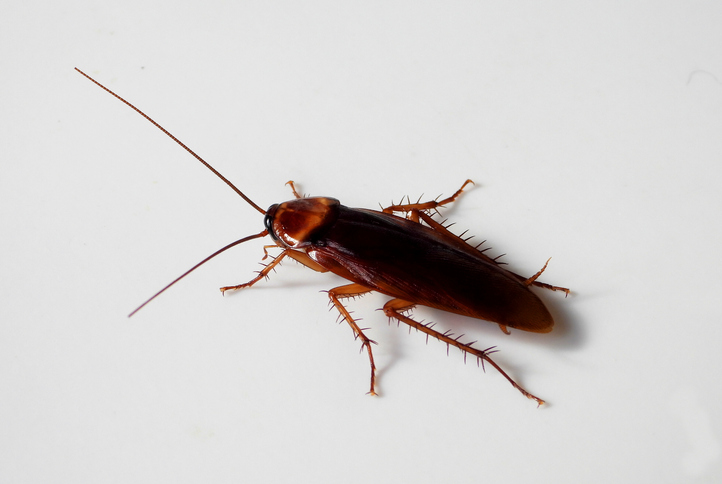
The American cockroach ranges in size from 1 3/8 inches to 2 1/8 inches in size. They are found in residences, but are more common in larger commercial buildings, like restaurants, warehouses, food processing plants, in basements and steam tunnels.
In the United States this is the most common species found in city sewer systems. More than 5,000 individuals have been found in a single sewer manhole.
American Cockroaches favor microhabitats with high humidity.The American cockroach rarely flies, but if they start from a high distance (like a tree) they can glide for a good distance. They will enter residence in search of warmth, food, and shelter.
American cockroaches feed on a wide variety of materials, including cosmetics, beer, potted plants, wallpaper paste, soap, postage stamps, fermenting fruit, pet food, and human food. They contaminate human food, clothing, paper goods, and surfaces with their feces and body parts. They are a mechanical vector of numerous bacterial and viral pathogens, including Samonella and Poliopmyelitis.
American cockroaches also produce a strong unpleasant odor. This characteristic odor is not only detectable in infested buildings but is also transferred to items that the cockroaches crawl across when foraging.
A pest management professional can often detect an American cockroach infestation by smell before he has actually seen any cockroaches.
Elimination is achieved by a combination of exclusion, proper sanitation, use of pesticides applied to critical entry points, and placing baits in gel or dust form near harborage sites.
by Judy
7. January 2011 09:34
In the fall and winter these commensal rodents are more likely to enter a house seeking shelter when the nights get cold and the available supply of outdoor food (seeds and insects)become more scarce.
Mice require just a little more than ¼ inch to enter a structure. Rats just a little more than ½ inch is big enough to enter.
The most common of commensal rodents is the house mouse - and the signs to look for are gnaw marks, droppings (their droppings are very similar in size and shape to the sprinkles on donuts or cookies and fresh droppings are soft, moist and dark about 1/8-1/4 inch).
The most common rat is the Norway rat – and the signs of infestation gnaw marks, droppings (their droppings are about ½ inch with blunt ends), rub marks on vertical surfaces where they have travelled, and damaged goods.
All rat species and mice species have very good senses – with the exception of sight. Remember the nursery rhyme about “Three Blind Mice”? Well it is very true. Mice cannot see clearly beyond 6 inches. Rats’ vision is not much better. However, their sense of hearing, touch, and smell is very good.
Mice will travel about 20ft range from their harborage point. Rats about 100 – 150 ft from their harborage.
The key to any control program is pest identification, sanitation, harborage elimination and rodent proofing the building.