

by Judy
28. July 2011 13:24
Yellowjackets, wasps, hornets and bees are all called bees by the general public. Knowledge of the behavior of these pests is essential to their management; effective communication with frightened or, at best, fearful clients is an important skill technicians must develop. Nests of stinging pests are usually the target for control. Understanding nesting and the make-up of the colony is essential.
[More]
by Judy
28. July 2011 12:59
Fleas are important group of insect pests because they cause discomfort by biting and they can transmit several diseases like the plague and murine typhus. Fleas cause discomfort and irritation to both pets and people. In the United States Cat fleas are the most common domestic flea and they are commonly found on both cats and dogs.
[More]
by Judy
23. February 2011 20:16
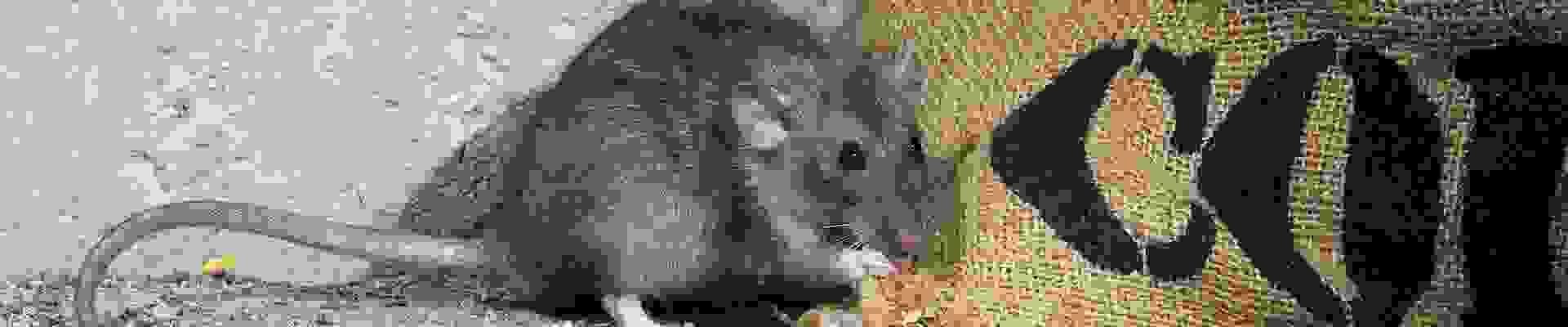
The Norway rat (Rattus norvegicus) is a stocky burrowing rodent, unintentionally introduced to North America by settlers who arrived on ships from Europe. First introduced into the United States about 1775, this rat has now spread throughout the contiguous 48 states. The Norway rat is found generally at lower elevations but may be found wherever humans live.
Also called the brown rat, house rat, barn rat, sewer rat, gray rat, or wharf rat, it is a slightly larger animal than the roof rat. The nose is blunt, the ears are small, close set and do not reach the eyes when pulled down. The tail is scaly, semi-naked and shorter than the head and body combined. When distinguishing the Norway rat from the Roof rat, pull the tail back over the body. The tail of the Roof rat will reach the nose. The tail of the Norway rat will not reach beyond the ears. Adult Norway rats weigh an average of about 1 pound. Their fur is coarse and usually is brownish or reddish-gray above, and whitish-gray...
[More]
by Judy
22. February 2011 20:10
Carpenter bees resemble bumblebees in both size and appearance, but are not social insects. They construct their nests in trees or in frame buildings. Most of the top of the abdomen of carpenter bees is without hairs and is shiny black in color. By contrast, the abdomen of bumblebees is fully clothed with hairs, many of them yellow in color.
The male bee is unable to sting. It is the male carpenter bee, which is most often noticed. They hover in the vicinity of the nest and will dart after any other flying insect that ventures into their territory. A common behavior of the males is to approach people if they move quickly or wave a hand in the air. The males may even hover a short distance from people causing unnecessary panic. The female however, is capable of stinging but seldom does. She must be extremely provoked (i.e. handled) before she will sting.
Carpenter bees do not eat wood. They excavate the tunnels for shelter and as chambers in which to rear their young.
They usually at...
[More]
by Judy
15. February 2011 09:33
Camel crickets get their name because of their slightly humpbacked appearance. Unlike most cricket species, Camel crickets don’t chirp. Because of their long legs and lack of wings – some people mistake them for a spider. They are nocturnal and hide during the day.
There are actually several species called camel crickets. One species, Tachycines asynamorous or "greenhouse stone cricket" frequently becomes a nuisance indoors.
Camel crickets often become a problem when we have extremes in weather conditions, i.e, excessive rainfall or extended periods of hot, dry weather. Like many insect pests, camel crickets are attracted to cool, moist/humid areas in and around our homes. The crickets often invade storage buildings, crawlspaces, basements, garages and indoor areas where moisture may be a problem (e.g., bathrooms, laundry rooms, etc.).
Control begins outdoors with reduction or elimination of moist harborage areas near the structure, such as removing wood piles and debris...
[More]
by Judy
11. February 2011 09:48
Paper wasps get their common name from the paperlike material of which they construct their nests; The nests are an umbrella-shape that consists of single-layered brood chambers of paper. Nests remain relatively small, with colonies generally numbering less than 200 workers.
Paper wasps have elongate bodies with distinct body segments, long metathoracic legs that are held outstretched in flight, and strong, relatively narrow, wings.
Only the female have a stinger, but Paper wasps are relatively docile, rarely attaching humans unless provoked.
Paper wasps are considered beneficial insects because they prey upon many pests that feed on agricultural crops. However, in urban areas, paper wasps hang their comb nest in a variety of protected sites near humans, including under the eaves and porch ceilings of houses and outlying buildings, in attic rafters bushes, trees, under bark, and sometimes under stones. The threat of a paper wasp’s sting, and the homeowner’s perception o...
[More]
by Judy
3. February 2011 09:38
These beetles were first reported in North Carolina in 1992.
Multicolored Asian lady beetles are about 1/4 inch long. Females are slightly larger than males and specimens from higher elevations are larger than those from the Piedmont and Coastal Plains. These lady beetles vary greatly in appearance. Some have yellowish or orange forewings. Some have beige forewings and some are bright reddish orange.
During the spring and summer, these lady beetles feed on aphids in field crops, gardens, meadows and trees. Multicolored Asian lady beetles are effective predators of aphids and some scale insects and are extremely beneficial for both agricultural and horticultural crops.
As temperatures start to cool in the fall , the adult lady beetles begin their search for protected places in which they can pass the winter. The beetles use visual or physical cues to find suitable overwintering sites. These locations tend to be the sunnier or warmer sides of buildings, or on exposed, light-colored bu...
[More]
by Judy
23. January 2011 09:46
Cigarette beetles are quite small, measuring about 2 to 3 mm (about 1/8 of an inch), and are reddish brown. They have a rounded, oval shape and the head is often concealed by the pronotum when the beetle is viewed from above.
The elytra (wing covers) are covered with fine hairs. When disturbed they often pull in their legs, tuck their head and lay motionless. They prefer to reside in dark or dimly lit cracks, nooks and crevices but become active and fly readily in bright, open areas, probably in an attempt to find refuge.
They are most active at dusk and will continue activity through the night. Adults do not feed but will drink liquids.
Cigarette beetles look almost identical to drugstore beetles but can be distinguished by two easily identifiable characters: the antennae of the cigarette beetle are serrated (like the teeth on a saw) while the antennae of the drugstore beetle are not and end in a 3-segmented club.
The other difference is that drugstore beetle elytra have rows of p...
[More]
by Judy
19. January 2011 20:12
Ticks have long been pests of humans and animals in North Carolina. From the larval to the adult stages, ticks attach to a living host and feed on the host’s blood. In doing so, they may transmit germs that cause Rocky Mountain spotted fever or Lyme disease, both of which can have serious consequences for humans.
Ticks are related to mites and spiders. They have four stages of development — the egg, larval, nymph, and adult stages. After hatching from the egg, the tick must take a blood meal to complete each stage in its life cycle. Each stage of the tick usually takes a blood meal from a different host. For most ticks, each blood meal is taken from a different type of host.
Ticks are usually active in the spring, summer, and fall. When seeking a blood meal, ticks move from leaf litter, from a crack or crevice along a building foundation or from another secluded place to grass or shrubs where they attach themselves to an animal as it passes. If a host is not found by fall...
[More]
by Judy
13. January 2011 09:30
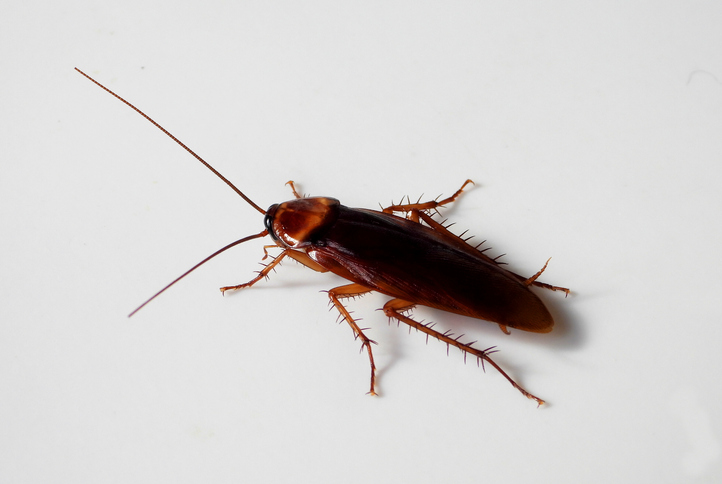
The American cockroach ranges in size from 1 3/8 inches to 2 1/8 inches in size. They are found in residences, but are more common in larger commercial buildings, like restaurants, warehouses, food processing plants, in basements and steam tunnels.
In the United States this is the most common species found in city sewer systems. More than 5,000 individuals have been found in a single sewer manhole.
American Cockroaches favor microhabitats with high humidity.The American cockroach rarely flies, but if they start from a high distance (like a tree) they can glide for a good distance. They will enter residence in search of warmth, food, and shelter.
American cockroaches feed on a wide variety of materials, including cosmetics, beer, potted plants, wallpaper paste, soap, postage stamps, fermenting fruit, pet food, and human food. They contaminate human food, clothing, paper goods, and surfaces with their feces and body parts. They are a mechanical vector of numerous bacterial and viral p...
[More]